Periodontics in Bilbao
We treat gum disease —gingivitis and periodontitis (gum disease)—, the leading cause of tooth loss in adults. Catching it in time saves your teeth. Free first consultation.
What is periodontics?
It is the part of dentistry that cares for the gums and the bone that hold your teeth: what is called the periodontium. When that support becomes diseased, the teeth lose their anchorage.
It all starts with the tartar and bacteria that build up below the gum. First the gum becomes inflamed and bleeds (gingivitis). If it is not halted, the inflammation gradually destroys the bone, with hardly any pain, and the teeth start to move: this is periodontitis, popularly known as gum disease. Treating it consists of removing those bacteria and giving the gum the chance to heal and stay stable.
Benefits of treating your gums in Bilbao
Saves your teeth
Stops bone loss before the teeth loosen and are lost.
Healthy gums
Goodbye to bleeding, inflammation, recession and bad breath.
Halts gum disease
Periodontitis is silent but treatable: the sooner it is caught, the more teeth are saved.
Better overall health
Gum health is linked to the heart, diabetes and pregnancy.
The basis for everything
Healthy gums are essential before implants, orthodontics or cosmetic work.
Tailored maintenance
A check-up plan so that, once controlled, it does not progress again.
What gum treatment is like
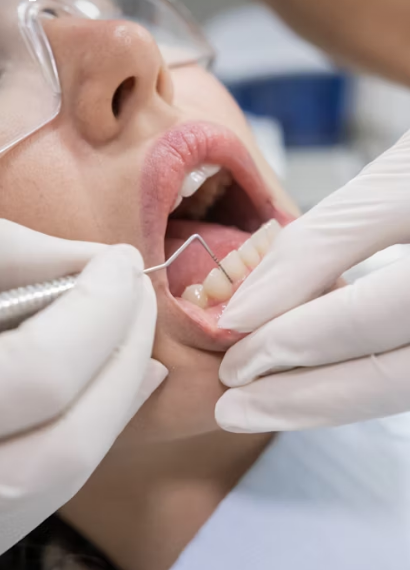
Periodontal study
We measure the gum depth around each tooth (probing), check the bleeding and mobility, and with an X-ray assess how much bone has been lost. That way we know exactly where you stand.
Scaling and root planing
It is the "deep cleaning": under local anaesthetic we remove the tartar and bacteria below the gum, on the root, and smooth the surface so the gum can reattach to the tooth.
Re-evaluation
A few weeks later we check how the gum has responded. In most cases the inflammation goes down and the bleeding stops. If any area needs more, we assess it.
Periodontal maintenance
The key part long-term: periodic check-ups and cleanings (usually every 3-6 months) so the disease does not progress again and you keep your teeth for many years.
Do you have any of these signs?
Gum disease progresses without pain, which is why many people do not detect it until late. If you recognise any of these symptoms, book a check-up:
- Bleeding when you brush or floss (the earliest sign and the most ignored).
- Red, swollen or tender gums instead of pink and firm.
- Bad breath or a bad taste that will not go away.
- Receding gums: the teeth look longer or the necks are showing.
- Teeth that move or that have separated or changed position.
- Sensitivity in the exposed root to cold or when brushing.
The sooner it is detected, the simpler the treatment and the more teeth are saved. At the free first consultation we carry out a study of your gums and explain where you stand.
Factors that increase the risk
Some factors make gum disease appear earlier or progress faster. Knowing them helps to prevent it:
- Tobacco: the most important risk factor and the one that responds worst to treatment.
- Insufficient hygiene: the plaque that is not removed is the origin of everything.
- Poorly controlled diabetes: it feeds back into periodontitis.
- Genetic predisposition and family history.
- Hormonal changes: pregnancy, menopause.
- Stress and certain medications.
You cannot change your genes, but you can change hygiene, tobacco and check-ups, which is where most of the control lies.
Maintenance is what keeps your teeth
Treating periodontitis is not a one-off act, but the start of ongoing control. Once the disease is halted, periodontal maintenance —cleanings and check-ups every 3 to 6 months depending on your case— is what stops it progressing again. It is exactly like controlling blood pressure or blood sugar: the treatment works if it is kept up.
Skipping maintenance is the most common reason for the disease to come back. That is why we plan it with you from the start, with a clear and realistic schedule.
Do your gums bleed? Get them checked free
Free first consultation and study of your gums: we tell you clearly where you stand and what you need, with no commitment.
Everything about gum health
How do I know if I have gum disease?
The most common signs are: gums that bleed when you brush or floss, red or inflamed gums, persistent bad breath, gum recession (teeth "look longer"), sensitivity or teeth that move. With any of these, it is worth getting checked: bleeding is never normal.
What is the difference between gingivitis and periodontitis?
Gingivitis is the early stage: the gum becomes inflamed and bleeds, but there is no bone damage yet, and it is fully reversible. If untreated, it can progress to periodontitis (gum disease), where the bone that holds the tooth is destroyed. That damage cannot be recovered, but it can be halted.
Is periodontitis (gum disease) curable?
Periodontitis is not "cured" in the sense of recovering lost bone, but it is controlled very well. With the right treatment and, above all, with maintenance check-ups, its progress is halted and you can keep your teeth for many years. It is a chronic disease kept in check, like others in the body.
What does gum treatment involve?
It starts with scaling and root planing: a deep cleaning below the gum, under local anaesthetic, to remove tartar and bacteria from the root. In advanced cases periodontal surgery may be needed to access better or regenerate tissue. After that, periodic maintenance.
Does the scaling (curettage) hurt?
No, because it is done under local anaesthetic: you will feel no pain during the session. Afterwards you may have some sensitivity or slightly tender gums for a few days, which is easily managed. It is very bearable.
Why have my gums receded and my teeth look longer?
Gum recession is usually a consequence of periodontitis (gum and bone are lost) or of brushing too aggressively. Treating the cause halts the recession; in some cases it can be improved with gum surgery. We assess it in your study.
Am I going to lose my teeth?
If the disease is caught in time and treated, you would normally keep your teeth. The risk of loss increases when periodontitis progresses for years untreated. That is why we insist so much on detecting it early: gum bleeding is the first warning.
Does gum disease affect the rest of the body?
Yes. Periodontitis is linked to poorer diabetes control, cardiovascular problems and pregnancy complications, among others. Caring for your gums is caring for your overall health, not just your mouth.
Can I have implants if I have periodontitis?
First the disease must be controlled. Placing implants in a mouth with active periodontitis is a mistake: the implant can also lose bone (peri-implantitis). Once the gums are stabilised, implants are an excellent option.
Is gum disease hereditary?
There is a genetic predisposition element: if your parents had it, it is worth keeping a closer watch. But the factor that weighs most is care: hygiene, tobacco and check-ups. Even with a predisposition, with good control it can be kept in check.